New York City
MTA Expands Fare Gates That Injure Riders But Miss Fare Evaders
By BSN Staff, . BSN Network. Satire.
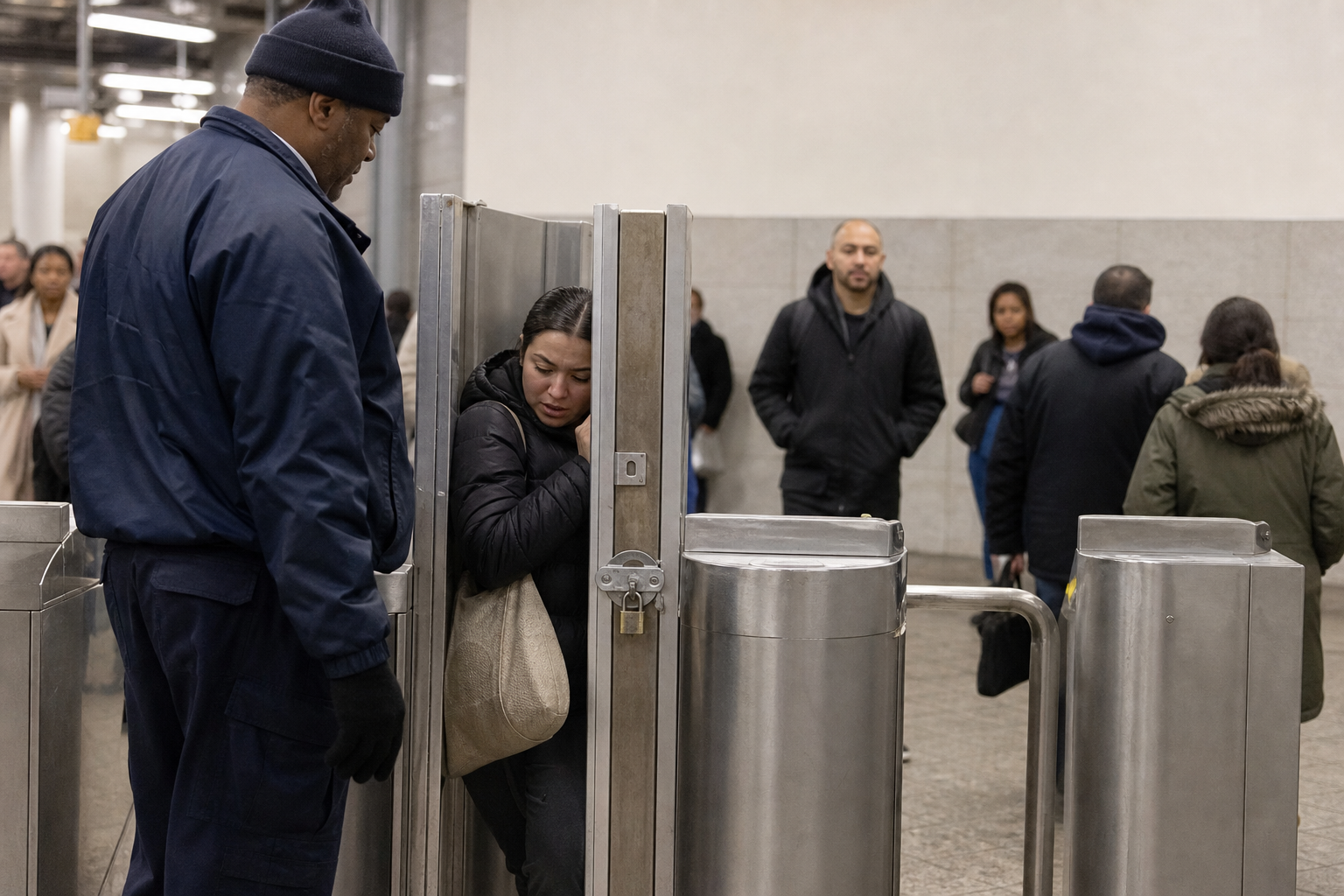
NEW YORK, NY -- The Metropolitan Transportation Authority confirmed this week that it will install its new glass fare gates at 20 additional subway stations across the city, building on the momentum of a pilot program best described as a controlled experiment in which the control group was the turnstile and the experiment was the emergency room.
The gates, which are designed to reduce fare evasion, have so far distinguished themselves primarily by closing on paying customers mid-entry and remaining fully navigable by anyone willing to go around them, through them, or simply wait for the person ahead to absorb the impact.
The MTA reported that fare evasion costs the system approximately $700 million a year. The new gates, according to riders at pilot stations, have addressed this problem by adding a second cost: the physical one.
"I tapped my card, the gate opened, and then it closed again before I was through it," said Darnell Fuentes, 34, a Bronx resident and paying MetroCard holder who described the experience as being rejected by a door he had already paid to open. "The guy behind me just hopped the old bar that was still there. I don't know why there was still a bar there. Nobody knows why there's still a bar there."
MTA Chair and CEO Janno Lieber addressed the concerns at a press conference Tuesday, calling the expansion "a bold next chapter in the authority's commitment to a fairer, safer, more equitable transit experience for every New Yorker," a sentence that took longer to say than it takes to walk through the emergency exit.
Lieber added that the injuries reported during the pilot phase were "part of any learning curve" and that the authority had already implemented software updates to reduce gate closing speeds, which riders at the pilot stations described as still very fast, just now with more of a warning.
The MTA has not released figures on how much fare evasion has declined at pilot stations. It has released figures on gate installation costs, expansion timelines, and a rendering of what the gates look like when nobody is being hit by them, which is a serene image.
Transit advocates were less serene. Riders Alliance executive director Jessica Krupke called the expansion "premature" in a statement that the MTA acknowledged receiving and described as "valued stakeholder input," which is what the MTA calls a letter it has already decided not to read.
At the Jay Street-MetroTech station, one of the original pilot locations, a laminated sign taped above the gate panel reads: "Please hold bags to the side when entering." Below it, someone has added in marker: "And your body."
The 20 new stations are expected to receive the gates by the end of the fiscal year. The MTA says it remains committed to eliminating fare evasion, which currently costs $700 million annually, using a system that costs several hundred million dollars to install and works best when the commuter is small, fast, and paying close attention.
For everyone else, the emergency exit remains unlocked.
The story we are making fun of: https://nypost.com/2026/10/07/us-news/mta-doubles-down-on-new-fare-gates-plans-to-expand-to-20-more-nyc-subway-stations/