Absurdity
Tennessee Picked Christa Pike's Execution Method So Witnesses Wouldn't Feel Weird
By Jeff Garstein, . BSN Network. Satire.
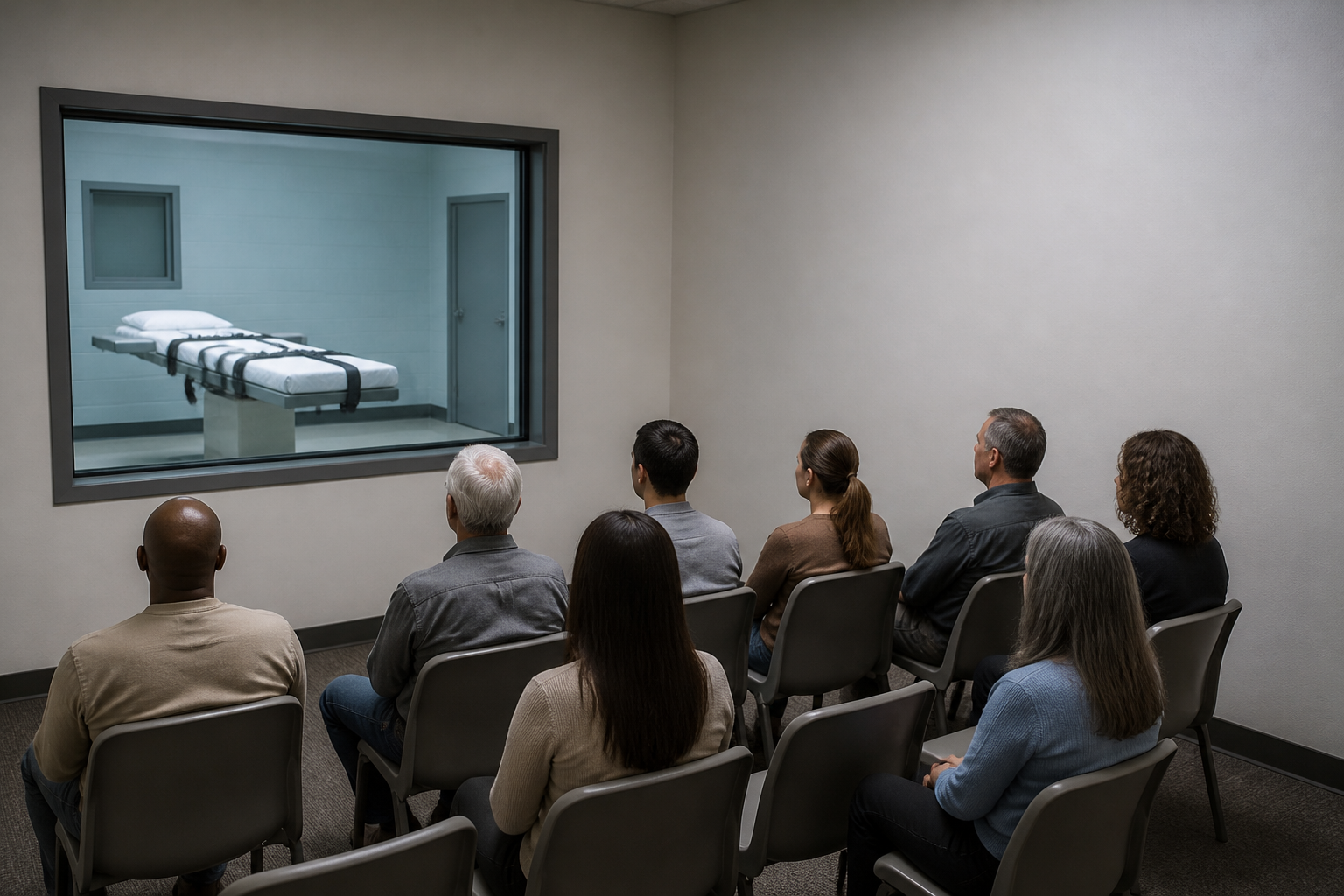
NASHVILLE, Tenn. -- The state of Tennessee has scheduled the execution of Christa Pike, who in 1995 was convicted of the torture and murder of a fellow student, using nitrogen hypoxia, a method selected after years of litigation, legislative review, and what one state document described as a careful assessment of inmate experience during the procedure.
Christa Pike was nineteen when she and an accomplice abducted Colleen Slemmer, cut her with a box cutter and a chunk of asphalt, and left her in a field. She was convicted and sentenced to death by a jury that deliberated for less than an hour, which is the fastest a group of twelve strangers has ever agreed on anything in Tennessee.
The state's preferred method for carrying out that sentence is nitrogen hypoxia, in which the inmate breathes pure nitrogen until they lose consciousness. Officials have described the process as producing no pain, no panic, and, according to observation reports from Alabama's use of the method, an atmosphere in the death chamber that witnesses called "remarkably calm."
Tennessee reviewed those reports carefully. The calm of the witnesses was apparently a metric.
This is the part where it is useful to stop and ask the question no one in the four oversight bodies seems to have asked aloud: calm for whom, exactly, and is that the right optimization target here?
A majority of Americans consistently tell pollsters they support capital punishment. A separate, overlapping majority tell a different set of pollsters that they prefer execution methods that are "humane" and "painless," which is a preference that makes a great deal of sense if you have decided that killing a person is acceptable but would prefer the killing to feel, atmospherically, more like a spa than a consequence.
The state of Tennessee has accommodated this preference at significant expense. The litigation over execution methods has run for the better part of a decade. At one point a federal court reviewed whether a three-drug lethal injection protocol created an unconstitutional risk of pain, a sentence that required four separate lawyers to write with straight faces.
The result of all that work is a procedure that a state official, in a 2024 filing, described as "the most dignified option currently available."
Dignified. That is the word that made it through the review process. Nobody flagged it.
Christa Pike, asked about her preferred method, requested electrocution, then later requested nitrogen hypoxia. Her legal team has filed challenges on the grounds that the method is experimental and the protocol untested at the state level. The courts have so far declined to stop the execution.
Meanwhile, the state continues to refine the checklist. Lighting levels in the chamber. Restraint positioning. Witness sightlines. The whole thing is managed with the institutional care of a venue preparing for a corporate event, which it resembles in almost every way except that the guest of honor did not RSVP voluntarily.
Sixty percent of Americans support the death penalty. Sixty percent of Americans have also never had to write a memo about the calming effect of the room on the people watching someone die in it.
There is no version of an execution that resolves that gap. Tennessee just found the version that lets everyone pretend there is.
The story we are making fun of: https://nypost.com/2026/10/07/opinion/why-the-clean-execution-meant-for-christa-pike-is-anything-but/