Absurdity
President Insists Rates Must Be 1% Or Lower, Does Not Explain What Happens At 0.9%
By Jeff Garstein, . BSN Network. Satire.
The Federal Reserve raised interest rates by a quarter of a percentage point this week, the first increase since July 2023, a decision that Fed Chair Kevin Warsh described as data-driven, measured, and consistent with the Fed's mandate to maintain price stability. President Trump described it differently.
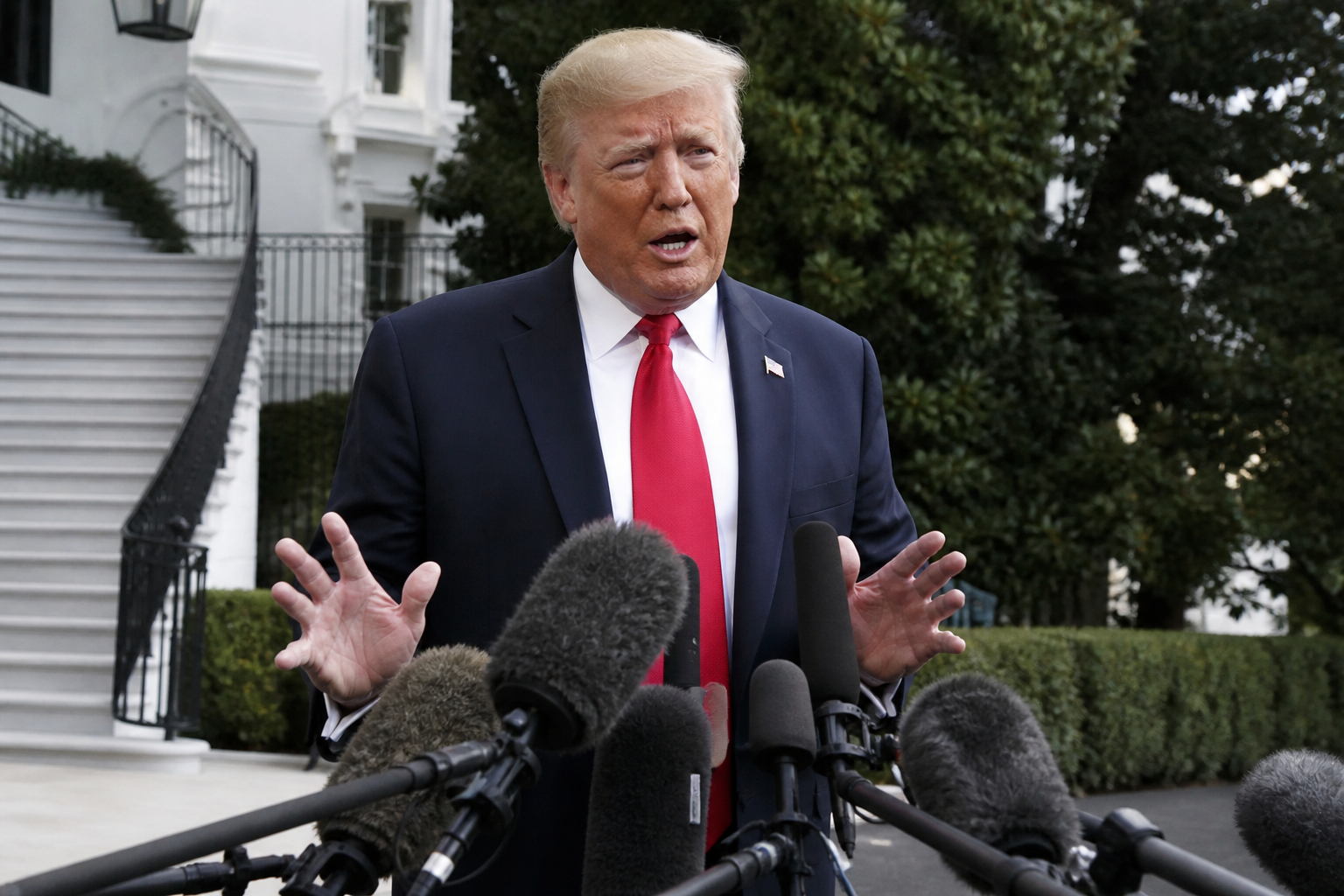
"The country is doing PHENOMENALLY," the President posted, "better than anyone has ever seen. Rates should be 1%, OR LESS." The all-caps "OR LESS" is doing a lot of work there. OR LESS. As in, the number should go down. As in, the Fed should look at a surging economy and respond by making money essentially free, because when things are going great, the correct move is to eliminate the cost of borrowing entirely. This is not how central banking works. This is also not how anything works.
To be clear about what 1% actually means: the Federal Funds Rate has not been at 1% since 2004, during a period economists mostly remember as "before the part where everything collapsed." The last time rates were held near zero for an extended stretch, the Fed was trying to prevent a second Great Depression. Trump is proposing the same tool for a situation he is simultaneously describing as the greatest economy in the history of civilization.
Kevin Warsh, who was appointed by Trump himself and confirmed by the Senate in March, announced the hike following a two-day FOMC meeting in which the committee reviewed inflation data, labor market conditions, and GDP projections. Trump reviewed none of those things and arrived at 1% anyway. Warsh has declined to comment publicly on the President's post, which is either admirable restraint or a man sitting very quietly in a room, hoping the door stays closed.
Former casino operator and current economic advisor to himself Donald Trump has previously called for rates of zero, rates below zero, and, during one memorable 2019 stretch, suggested the Fed was a greater threat to America than China. The Fed, for its part, kept doing math.
Jamie Dimon, JPMorgan Chase CEO and a man who has spent forty years thinking about exactly this subject, said in a statement that "the Fed's decision reflects appropriate caution given persistent inflationary pressures." He then presumably returned to his office and did not post anything in all-caps.
The most clarifying detail in the President's statement is the phrase "or less." Not "around 1%." Not "closer to 1%." OR LESS. Which means the President has considered the possibility that 0.9% might also be acceptable. Or 0.4%. Or a number chosen by spinning a wheel. The statement does not set a floor. The statement is not interested in floors. The statement has left the building where floors are kept and is standing outside, confident.
Congress has no formal authority over the Federal Reserve's rate decisions, a design choice made deliberately in 1913 specifically to prevent elected officials from pressuring the central bank for short-term political gain. The people who wrote that law are unavailable for comment but would almost certainly recognize this week.
Warsh's next scheduled press conference is in six weeks. He will be asked about the President's remarks. He will say something careful and measured and institutional. The President will post again within forty-five minutes.
The quarter-point hike stands.
The story we are making fun of: https://www.theguardian.com/us-news/live/2026/sep/16/donald-trump-iran-russia-midterms-north-carolina-latest-news-updates