Politics
White House Press Room Now Occupied By Sinclair Affiliate And A Man Named Greg
By Mor Michael, . BSN Network. Satire.
President Donald Trump last week barred three major news organizations from White House press access, citing what he described as 'fiction and lies,' a standard that, applied consistently across his two administrations, would have cleared the building sometime in 2017 and never let anyone back in.
The outlets, AP, CBS News, and the Los Angeles Times, were removed from the briefing room pool rotation following coverage the administration deemed insufficiently accurate, a designation the White House has not defined in writing, measured by any instrument, or submitted to any body with the legal authority to care.
Constitutional law professors have responded with what can only be described as a very long semester's worth of material.
"The First Amendment does not give the government the right to curate its own press corps based on whether it likes what the press corps writes," said UCLA law professor Eugene Volokh, who has been saying this, in various forms, since January. "That's actually the entire point of the First Amendment. That's not a close question."
The White House has countered that the President retains broad authority over who enters federal property, a legal theory that is technically true of the White House gift shop and considerably less true of a constitutional democracy's press infrastructure.
Sean Hannity, who is not a lawyer but plays one on television five nights a week, told his audience that the banned outlets "forfeited their right to access by choosing to be dishonest," without specifying who had been appointed to make that determination, what the appeals process looks like, or whether the standard applies to, for example, Fox News's seventeen corrections in the last calendar year. He then moved on to a segment about border security.
The legal hurdles are, by most accounts, substantial. Federal courts have previously held that once the government opens a forum to the press, it cannot exclude journalists based on viewpoint without triggering First Amendment scrutiny. The administration's position is that it has not excluded anyone based on viewpoint, it has excluded them based on accuracy, which is the same thing with better vocabulary.
The press organizations themselves have filed suit. The AP's complaint runs forty-one pages and cites precedents going back to the Nixon administration, which is, for a document arguing against authoritarian press management, a somewhat on-the-nose citation.
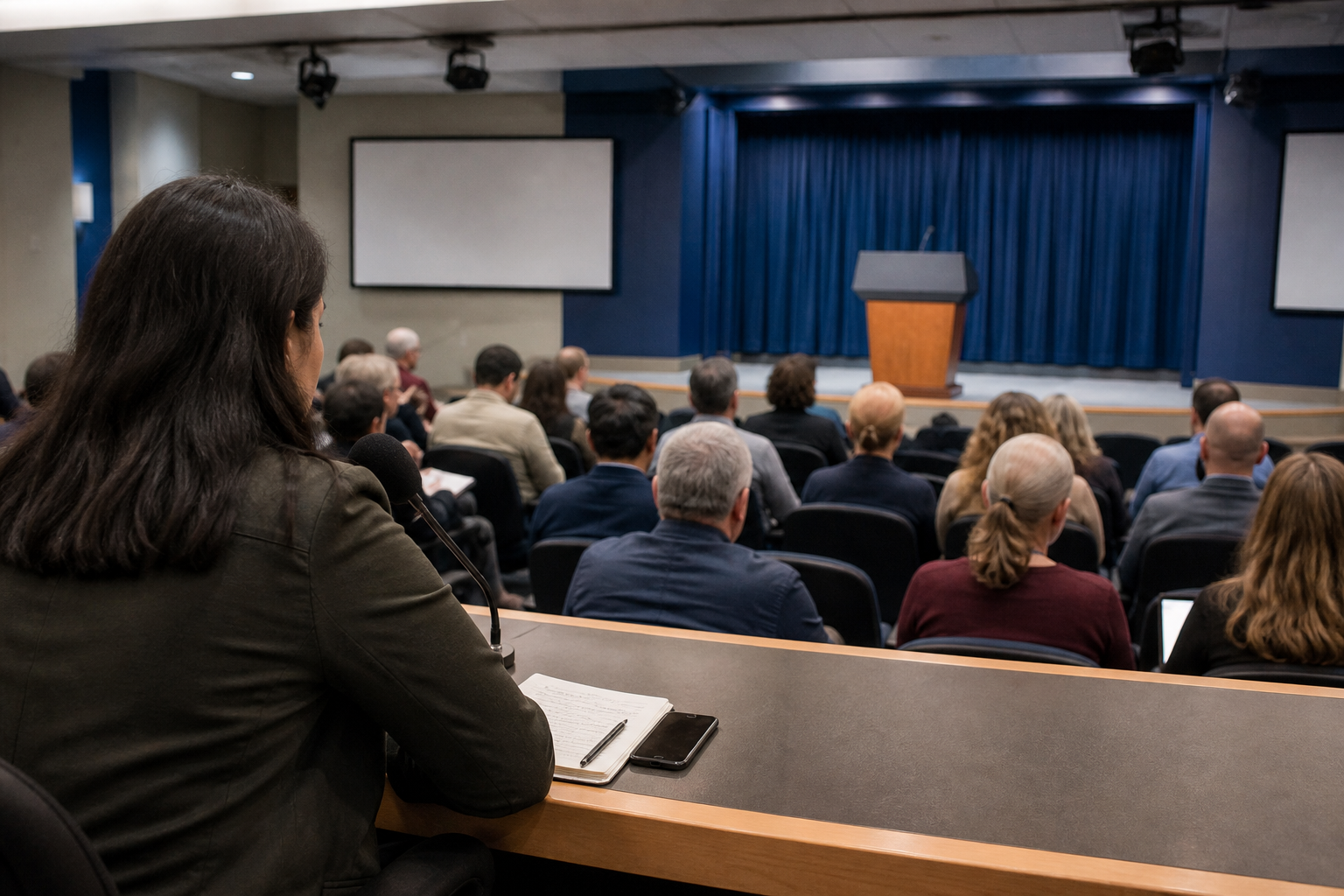
In the meantime, the White House press briefing has continued. Attendance is down. The remaining credentialed outlets have taken to sitting slightly further apart, the way people do at a party after someone has been quietly asked to leave and everyone is pretending not to have noticed.
Sources familiar with the briefing room say a Sinclair Broadcasting affiliate has moved into a considerably better seat.
A man named Greg, from a newsletter covering mid-Atlantic agribusiness trends, confirmed he now has an unobstructed sightline to the podium for the first time in four years. He described the view as "pretty good, honestly."
Greg declined to comment on the constitutional implications. His newsletter goes out on Thursdays.
The story we are making fun of: https://www.bloomberg.com/news/articles/2026-09-23/why-trump-s-ban-on-media-outlets-faces-constitutional-hurdles