Conspiracy
Journalists Investigate 17 Pre-Presidential Trump Rumors And Now Owe Him An Apology For Three Of Them
By Tah Foil, . BSN Network. Satire.
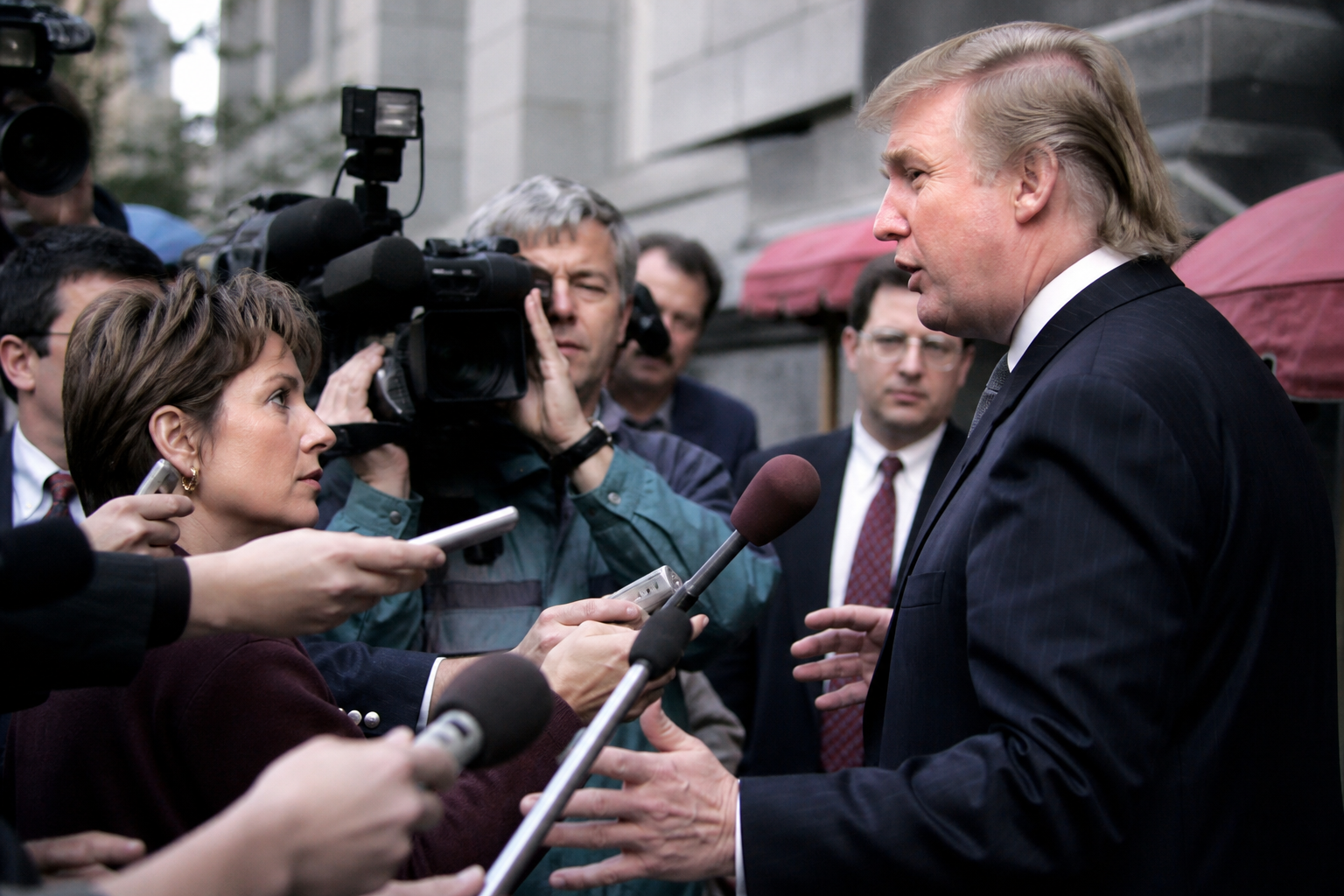
A media organization published findings this week from a months-long investigation into 17 claims circulating about Donald Trump's conduct before he entered politics, covering his business career, his alleged acts of generosity, his public statements across four decades, and at least one incident involving a limousine driver whose name, sources confirm, the investigation team has been sitting on since March.
The outlet did not name the limousine driver.
Of the 17 claims examined, investigators rated 11 as substantially accurate, four as unverifiable due to what the report called a "documentation gap consistent with the pre-smartphone era," and three as not only true but, in the words of one senior researcher who asked not to be identified, "annoyingly true in a way that complicated the framing."
Those three claims, which the report buries in section four beneath a photograph of a different Trump and a subheading reading "Context Matters," include a 1986 account in which Trump reportedly paid the medical bills of a New Jersey bus driver he had read about in a newspaper, a 1995 appearance on Oprah in which he made three predictions about American trade policy that have since, to varying degrees, come true, and a 1991 interaction at a Manhattan hotel in which Trump is alleged to have been, according to four witnesses, "perfectly pleasant."
The investigation into the bus driver alone took eleven weeks. Researchers located the original newspaper clipping, contacted the driver's former employer, identified two living relatives, and commissioned a handwriting analysis of a thank-you note the driver reportedly received. The analysis concluded the note was consistent with Trump's known signature. The researchers then consulted a second handwriting expert who said the same thing, and a third, who said it was "very likely" and then asked if he was going to be named in the article.
He was not named in the article.
Journalist and lead investigator Dana Preswick, who has covered Trump for eleven years and has a FOIA request pending with the city of New York that she described as "extremely related, give it time," said in a statement that the findings should not be taken out of context.
"What we found," Preswick wrote, "is that rumors, by their nature, exist on a spectrum. Some are false. Some are true. Some are true in ways that, if reported accurately and without the surrounding context that our team spent considerable effort assembling, would create a misleading impression of the overall picture, which is why we have assembled the surrounding context, and also a timeline graphic that runs across two pages and is very hard to read on mobile."
The Oprah segment, which aired in September 1995, was also independently reviewed by two cultural critics who were asked to assess whether Trump's trade predictions constituted genuine foresight or, as the report's authors put it, "coincidence operating at scale." One critic said foresight. The other said it was impossible to separate the predictions from Trump's broader rhetorical style, which she described as "confident wrongness deployed so consistently that statistical probability eventually does some of the work for him."
This quote appears in the report. So does a rebuttal from a third critic who was brought in after the first two disagreed, and who said he had not seen the segment but was happy to comment on the general phenomenon.
The 1991 hotel interaction, described by witnesses as "pleasant," was the subject of what the report calls a "corroboration audit." All four original witnesses were contacted. Three confirmed their accounts. The fourth said she remembered the encounter differently and that Trump had actually been "fine, maybe a little distracted, not unpleasant." This was recorded as a partial corroboration. The report notes, in a footnote on page 31, that being "not unpleasant" falls within the margin of error for "pleasant" and that the discrepancy does not materially alter the finding.
Page 31 also contains a correction to a claim the outlet published in 2019 about a different hotel in a different city, which the correction describes as having been "based on sourcing that we remain confident in, though subsequent reporting has raised questions we continue to take seriously."
The investigation was funded in part by a nonprofit whose board includes three former White House staffers, a detail disclosed on page 38 in a font the report describes, in a separate note, as "standard disclosure size."
The limousine driver has not been reached for comment. His phone, researchers noted in their internal files, which were shared with no one but are understood to exist, goes straight to voicemail.
The story we are making fun of: https://www.snopes.com/collections/trump-before-president-claims/