Politics
Labour Set to Win UK Election on Support of One in Four Voters
By Mor Michael, . BSN Network. Satire.
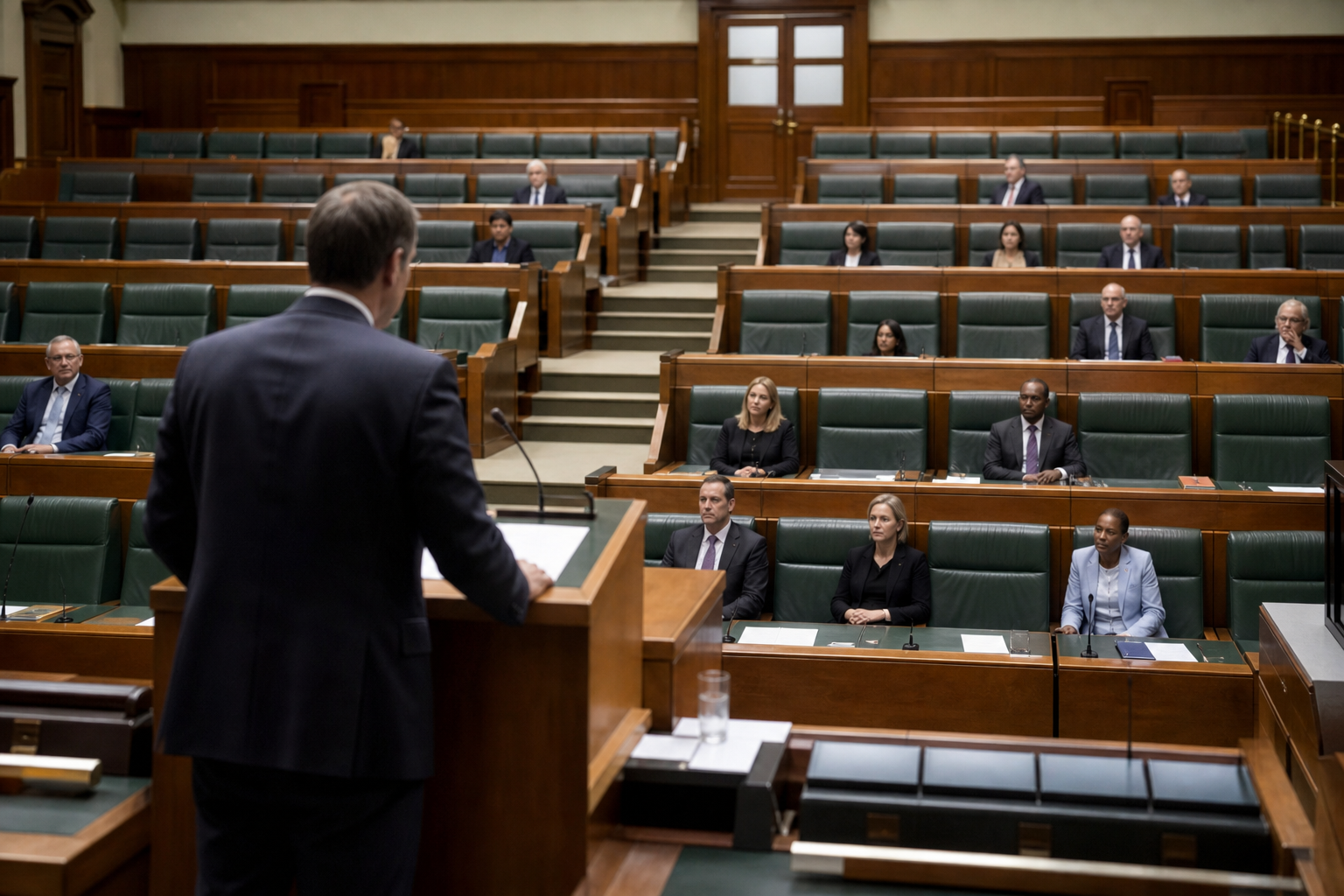
A YouGov multilevel regression and post-stratification model, which is a phrase that sounds like it was designed to make journalists stop asking follow-up questions, currently projects that the Labour Party would win more seats than any other party in a UK general election. Labour's projected vote share is approximately 27 percent. The model was released Monday. The bunting went up Tuesday.
Prime Minister Andy Burnham, who assumed the role after Labour's previous leadership cycle produced a sequence of events too depressing to recount in a news article aimed at remaining readable, called the findings encouraging. His office issued a statement describing the projection as evidence of renewed public confidence, which is one way to describe one in four people.
The model's more interesting finding is what happened to Reform UK. Nigel Farage's party, which spent the better part of eighteen months polling between 35 and 38 percent and generating a level of media coverage usually reserved for a comet that might hit the Earth, has slipped to somewhere in the low thirties. This is still enough to place second. It is also apparently enough for Farage to lose the lead, which is a sentence that rewards careful reading.
Farage, reached by a Sky News correspondent outside what appeared to be a pub that had been specifically selected for the backdrop, said the poll reflected, quote, a temporary blip driven by establishment panic and a media that has never understood what real people are thinking. He then described himself as very relaxed about it for approximately four minutes.
The difficulty for Reform is structural. Under Britain's first-past-the-post system, a party can win 32 percent of voters nationally and translate that into a number of seats that would fit comfortably in a mid-size conference room. Labour, meanwhile, can win 27 percent of voters and walk away with enough seats to govern, which is not a quirk of the system so much as the entire operating logic of the system, a logic that has been described as broken by every party that it has ever disadvantaged, immediately before that party figured out how to advantage itself from it.
Labour's annual conference begins this week in a city that was chosen to signal regional commitment and will be discussed in every speech as though the party invented the concept of the north. Burnham is expected to present the YouGov numbers during his keynote, describe them as a turning point, and then spend forty minutes explaining a housing policy that three members of the shadow cabinet privately admit they cannot summarise.
A Labour spokesperson, asked whether the party was concerned that winning on 27 percent constituted a thin democratic mandate, said the party was focused on delivering for working people and trusted the British public to make their voices heard. This answer was given to a question about arithmetic.
Reform's internal polling, according to two people familiar with it who declined to be named because they were not authorised to speak and also because the numbers were not good, shows the party's support holding firm among its core base while softening among the voters it needed to actually win anything. This is the political science version of being told your personality is great.
The model will be updated monthly. Both parties have already called the next update the one that will really show the truth.
The story we are making fun of: https://www.bloomberg.com/news/articles/2026-09-24/farage-s-reform-slips-behind-labour-and-tories-in-new-mrp-poll