Politics
Peruvian President More Popular Than Her Own Government By Significant Margin
By BSN Staff, . BSN Network. Satire.
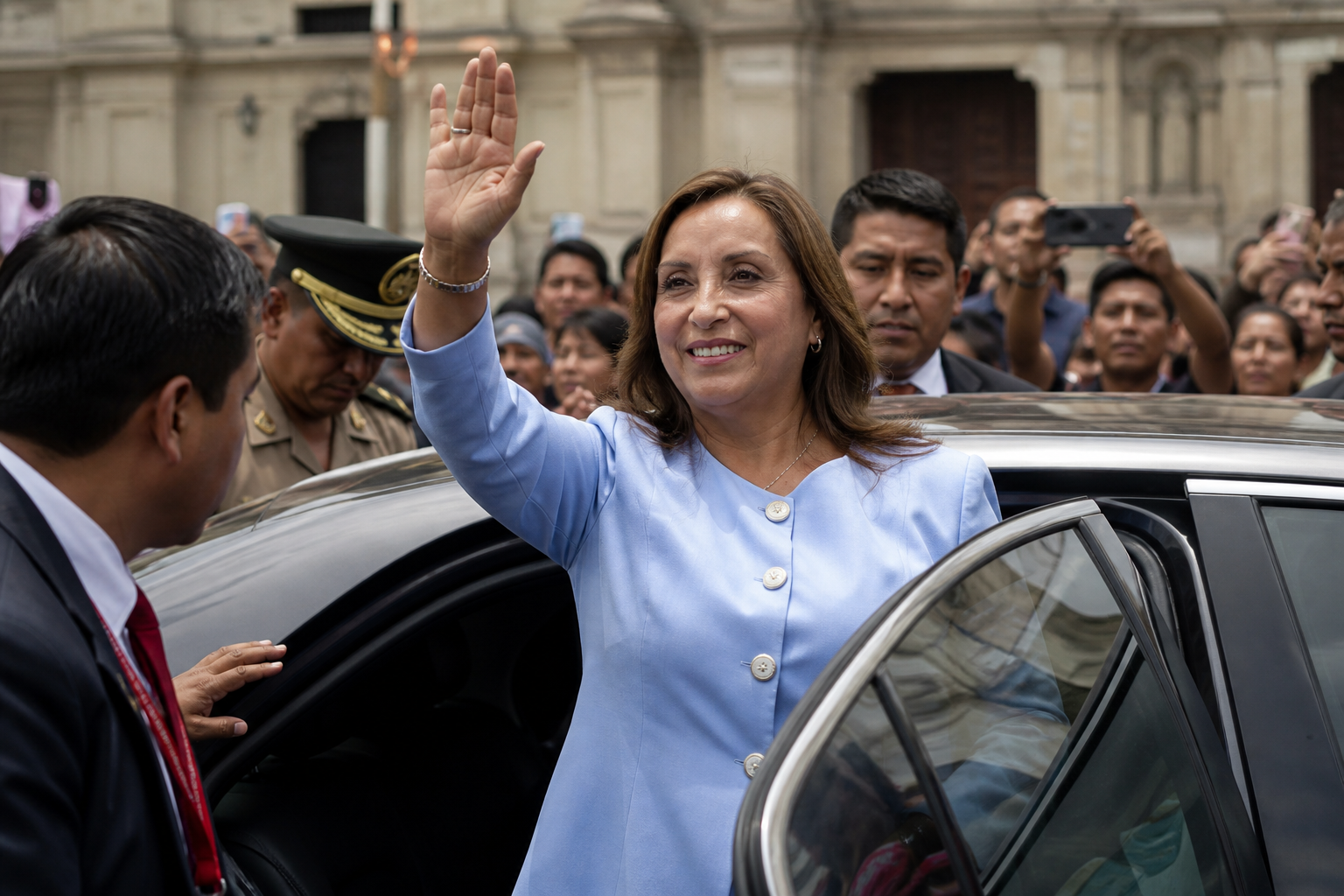
LIMA, Peru. A new national survey released this week confirms what many Peruvians apparently feel but struggle to articulate: they like Keiko Fujimori more than anything Keiko Fujimori is actually doing.
The poll, conducted by Datum Internacional, places the president at 42.8 percent personal approval, a figure that sounds modest until you learn that her government, as a functioning institutional entity, is polling somewhere below that. The exact spread has not been officially headlined by the pollsters, presumably because naming it outright would constitute a kind of public humiliation that even Peruvian journalism considers excessive.
Fujimori, daughter of imprisoned former president Alberto Fujimori and longtime fixture of Peruvian political life, won the 2026 election on a platform of stability, anti-corruption, and the general vibe that she had been trying to get into this office for so long that the country might as well let her. Voters obliged. The government that followed has been, by the numbers, less persuasive.
Political scientist Rodrigo Valcárcel of the Universidad Pontificia Católica del Perú described the phenomenon as "a dissociation between the symbolic executive and the operational executive," which translates from academic into plain language as: people are fine with her face, they just wish her government would stop existing in its current form.
"This is not unprecedented in Latin American politics," Valcárcel added, in the tone of someone who has spent a career explaining that things are not unprecedented in Latin American politics.
The cabinet, for its part, has not held a press conference addressing the numbers. The Ministry of the Presidency released a statement describing the poll results as "an opportunity for continued dialogue with the Peruvian citizenry regarding the ongoing process of institutional confidence-building," a sentence that contains seventeen words and zero information, and which may itself be partly responsible for the approval gap.
Fujimorismo, the political movement built around the family name, has always had a complicated relationship with popularity. Alberto Fujimori governed through the 1990s with strong approval ratings and a secret side project involving systematic human rights abuses, which somewhat complicated his legacy. Keiko has spent approximately two decades trying to become president while prosecutors tried to prevent it, a dynamic that gave her a certain underdog quality that now, in power, is harder to maintain.
The underdog does not control the finance ministry. The underdog does not appoint the interior minister. The underdog, it turns out, is a more sympathetic figure than the person those ministers report to.
Citizens interviewed outside the Mercado Central in Lima offered views consistent with the data. "She seems fine," said Marco Quispe, 44, a hardware vendor. "It's everything else." When asked to specify what everything else meant, Quispe gestured broadly at the city around him, which analysts may choose to interpret as they see fit.
A woman who declined to give her name said she had voted for Fujimori because the alternative was worse, a sentiment that, if aggregated nationally, would explain roughly 42.8 percent of anything.
The survey has a margin of error of plus or minus 2.8 percentage points, which means the president's approval could technically be as low as 40 percent, a number her communications team has decided not to put on a banner.
The next scheduled poll will be released in thirty days. The cabinet has thirty days to do something about this, which is also not unprecedented in Latin American politics.
The story we are making fun of: https://www.bloomberg.com/news/articles/2026-09-08/peru-keiko-fujimori-alcanza-42-8-de-aprobacion-en-encuesta