Politics
Putin Schedules Annual December Infrastructure Strikes To Avoid Holiday Rush
By Mor Michael, . BSN Network. Satire.
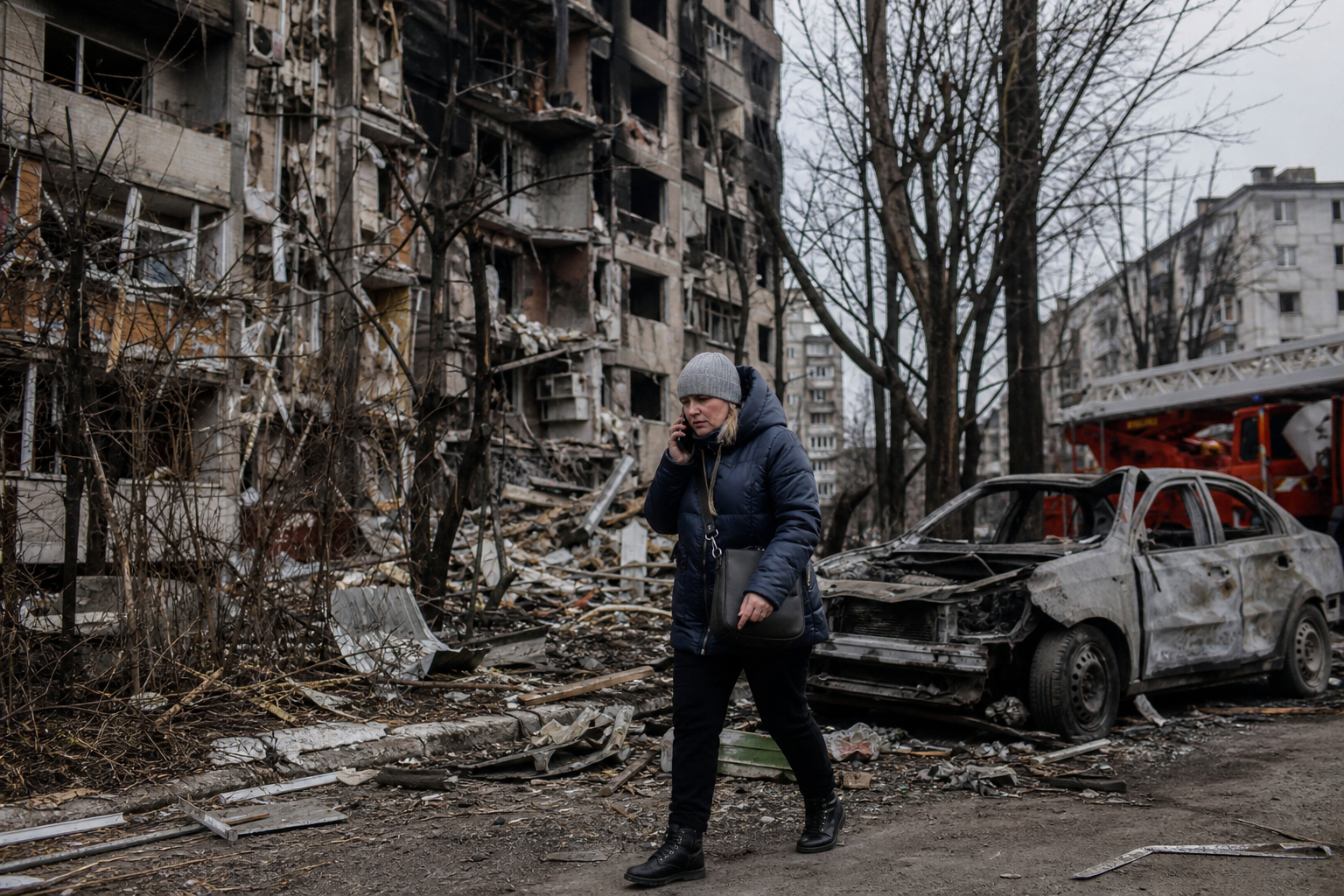
KYIV, Ukraine. Ukrainian officials confirmed this week that the country is bracing for what they are calling the worst winter of the war, a designation that requires noting the two previous winters were also called the worst winter of the war at the time, a streak that suggests either an optimism problem or a math one.
Russia has struck Ukrainian energy infrastructure in November and December in 2022, 2023, and 2024. Western analysts describe this as a deliberate strategy. Ukrainian civilians describe it as a thing that happens to them every year now, the same way some families dread Thanksgiving.
The Ukrainian government has prepared a contingency plan. The plan involves generators, stored water, mobile warming stations, and a public communications campaign reminding citizens to charge their devices when the electricity is on, which is advice that also appeared in the 2023 plan, word for word, because it remains correct.
Elon Musk, who controls the Starlink satellite network that Ukraine depends on for battlefield communications and that he has previously threatened to switch off during active combat operations, said this week that he remains "committed to supporting the people of Ukraine," a sentence he has now said in three different calendar years without anyone being entirely sure what it is attached to.
"Starlink is a lifeline," Musk posted, from a yacht.
On the Russian side, the targeting of civilian power infrastructure has been acknowledged by Kremlin officials as a legitimate military objective, a framing that requires defining "military objective" as "the building where a grandmother's refrigerator is plugged in." Spokesperson Dmitry Peskov said the strikes are "proportionate responses to Western escalation," which is a sentence that has appeared in so many press briefings it now autocompletes on the Kremlin's internal word processor.
Meanwhile, European governments have pledged additional air defense systems, additional generators, and additional statements of solidarity, all of which are useful in different amounts. Germany announced a package of winter support. France announced a package of winter support. The United Kingdom announced a package of winter support and a press conference about the package of winter support, which ran forty minutes and included a PowerPoint.
Back in Kyiv, civil defense officials have divided the city into heating zones, established backup command centers that operate on independent power supplies, and distributed roughly four million pamphlets explaining what to do when the heat goes out. The pamphlet is titled "When The Heat Goes Out." This is the third print run.
One Kyiv resident, a 61-year-old retired schoolteacher named Olena, told reporters she has already moved her most important belongings to the one interior room of her apartment that stays above freezing. She has also purchased an additional blanket. When asked if she was scared, she said she was tired, which is a different thing and in some ways worse.
The Ukrainian energy ministry has asked citizens to limit electricity use between four and ten in the evening. Citizens have been asked this before. Some of them did it. The grid went down anyway.
Officials say this winter's plan is different because it accounts for scenarios the previous plans did not. They declined to specify what those scenarios were. A ministry spokesperson said the new plan reflects "lessons learned," which in Ukrainian energy policy has come to mean roughly what "thoughts and prayers" means in American gun policy: an acknowledgment that something happened, delivered in a tone suggesting it will not happen again, issued just before it happens again.
The contingency plan is 340 pages. Page one recommends charging your phone.
The story we are making fun of: https://www.bloomberg.com/news/articles/2026-09-21/ukrainians-are-bracing-for-worst-wartime-winter-of-airstrikes