Politics
Republican Midterm Candidates Get Three Minutes Each Between Trump's Opening And Closing Remarks
By Mor Michael, . BSN Network. Satire.
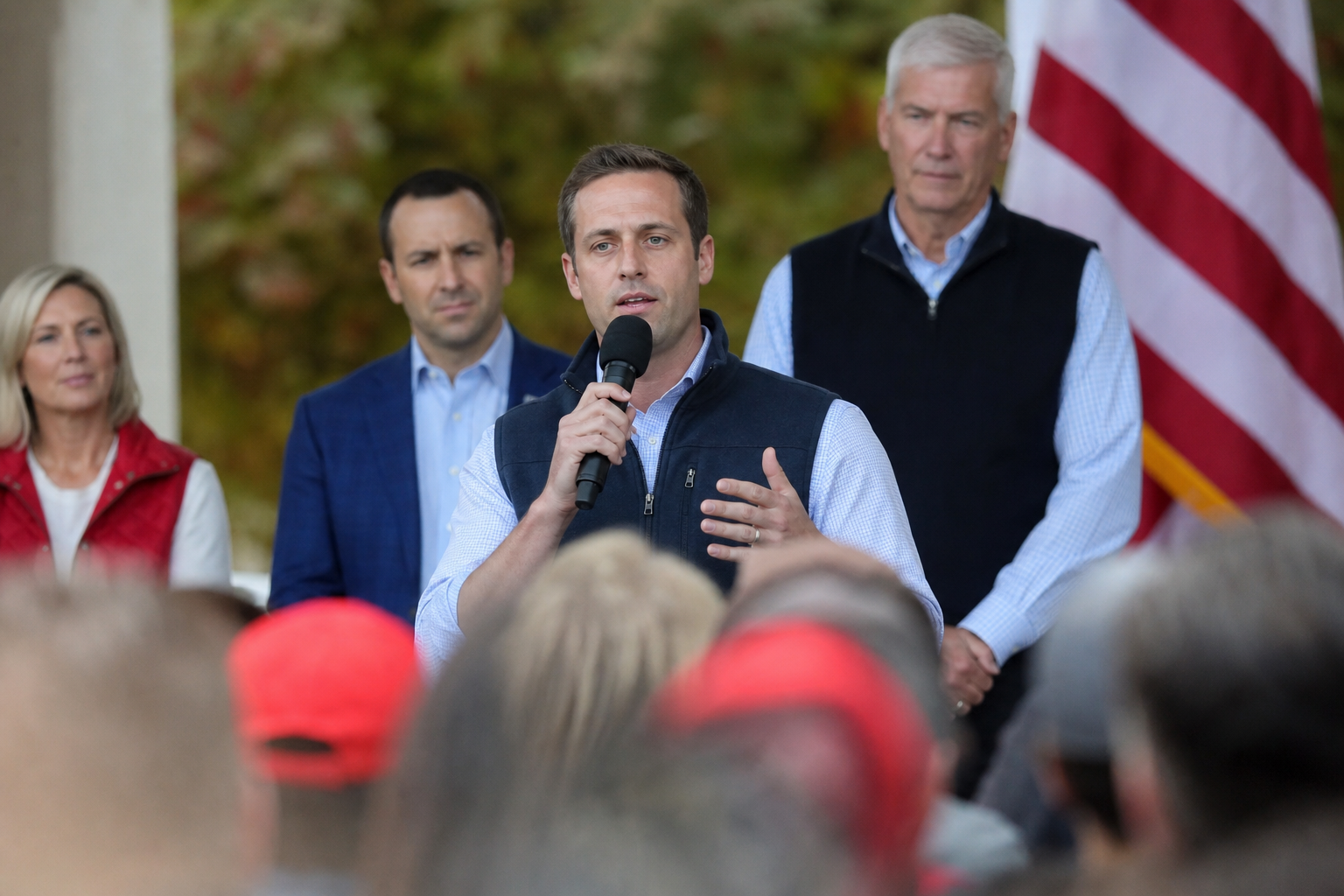
DALLAS, TX: President Donald Trump arrived at the Republican National Convention this week prepared to do something he has rarely done in the 2026 midterm cycle: campaign. The strategy, according to senior Republican officials, is to put Trump at the center of the party's closing argument to voters. This is what strategists are calling a pivot. Everyone else is calling it Tuesday.
The convention program listed forty-seven speakers. Trump was scheduled for the opening keynote, the luncheon address, and a closing remarks segment initially described as 'brief' in the printed agenda and later revised, in pen, to 'remarks.' Fourteen Senate candidates were grouped into a panel on Day Two titled 'America's Future Leaders,' which ran opposite a breakout session on Trump's first-term economic record that drew the larger room.
Senator Mike Lee of Utah, who is not currently running for anything, delivered a twenty-two-minute tribute to Trump's resilience that was warmly received. The candidate from Arizona spoke for four minutes and mispronounced her own district. Nobody mentioned this because the teleprompter had already moved on to a photo montage.
'I think what people don't fully appreciate,' Trump told the assembled delegates on Thursday morning, 'is how much I have done for the Republican Party. I saved it, frankly. I saved it from a lot of very bad people, and also from Mitt Romney, who is essentially the same thing.' He then listed his approval ratings in eleven states, read aloud from a Rasmussen poll he had printed and folded into his jacket pocket, and introduced the next speaker by accidentally calling him 'a great guy, whoever he is.'
The strategic logic, which Republican consultants are explaining to reporters with the careful patience of someone defusing something, is that Trump's personal popularity in red districts will carry down-ballot candidates who have otherwise struggled to generate enthusiasm or coherent policy positions. The theory has worked before. The problem, several of those consultants acknowledged off the record, is that it requires Trump to spend some portion of his time talking about candidates other than himself, which has not happened at a detectable rate.
Dana White, who was present at the convention in a capacity nobody has formally explained, told reporters that Trump is 'the greatest campaigner in the history of American politics, maybe in the history of campaigns generally, and I include ancient Rome in that.' He was then asked whether he had spoken with any of the Senate candidates. He said he had seen one of them near the buffet.
Candidates who requested more speaking time were told the schedule was full. Candidates who requested a joint appearance with Trump were told the President's team would 'look at the calendar.' The calendar, according to three people familiar with the situation, currently contains a dinner at Trump's Dallas hotel, a round of golf at Trump's Dallas golf course, and a fundraiser held at Trump's Dallas hotel again because the first dinner had gone well.
The Republican National Committee released a memo Friday describing the convention as 'an historic show of party unity.' The memo was four paragraphs long. Trump's name appeared eleven times. The names of candidates running in competitive races appeared a combined twice, once of which was a typo.
Voters in those competitive races will decide in November whether the strategy worked. The candidates are hoping to find out alongside everyone else.
The story we are making fun of: https://www.bloomberg.com/news/articles/2026-09-09/trump-s-2026-midterm-strategy-puts-himself-at-center-of-gop-campaign