Absurdity
Startup Says Federal Backing Will Speed Up Nuclear Fuel Production, Clarifies Speed Up Is Relative
By Jeff Garstein, . BSN Network. Satire.
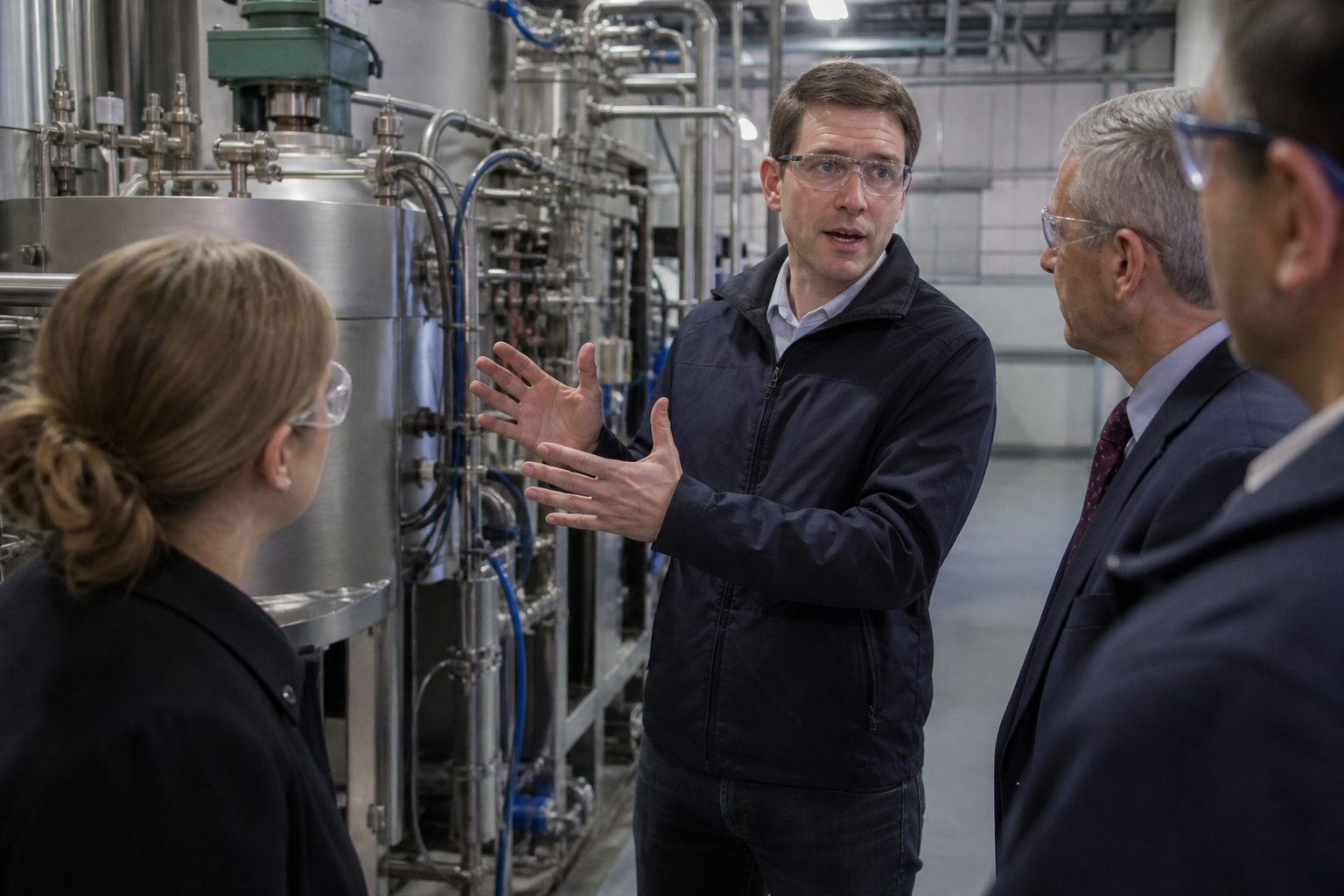
The United States government has determined that the best way to accelerate production of a rare and difficult-to-manufacture nuclear fuel is to give money to a company that has not yet accelerated production of a rare and difficult-to-manufacture nuclear fuel, but is optimistic about its chances.
The fuel in question is HALEU, or high-assay low-enriched uranium, a specialized form of enriched uranium that advanced nuclear reactors require and that the American supply chain currently produces at a pace best described as "geological." Data center operators, specifically the ones building infrastructure for artificial intelligence, have decided they need nuclear power, and nuclear power needs HALEU, and HALEU needs a supply chain, and the supply chain needs funding, and the funding has now been provided to Nusano, a startup whose solution to the problem is to exist and be hopeful.
Nusano announced that its federal backing positions the company to meaningfully accelerate domestic HALEU production. In a statement, CEO John Kruichak said the support "validates our approach" and "creates the conditions for a real step-change in American nuclear fuel capability going forward." He did not specify what the step-change would be, when it would occur, or how large a step was implied. The statement did use the word "pathway" four times.
To be clear about what is happening here: Google, Microsoft, and Amazon have all made public commitments to nuclear-powered data centers. Those reactors run on HALEU. The United States currently has enough HALEU in practical circulation to power a small research facility through a long weekend. The plan to fix this is a startup with a federal grant and a roadmap whose first milestone is labeled "capacity building."
"Capacity building" is what organizations call the period before they do the thing.
Nusano's technology involves particle accelerators rather than traditional enrichment cascades, which is genuinely interesting and probably real, and also completely irrelevant to the question of when any meaningful quantity of this fuel will exist. The company has been careful to frame its progress in terms of potential, trajectory, and the direction things are headed, which is the linguistic equivalent of a contractor who shows up, takes your deposit, and describes at length how good the finished kitchen is going to look.
The Department of Energy, for its part, has described HALEU production as a "national priority" since approximately 2019. In the years since, the United States has managed to establish one commercial HALEU production facility, operated by Centrus Energy, which runs a small cascade in Piketon, Ohio, and which the DOE has repeatedly praised as a critical breakthrough while also acknowledging it produces enough fuel per year to power about a dozen advanced reactors if those reactors needed almost no fuel and ran very infrequently.
Sam Altman, whose company OpenAI has made no secret of its desire for enormous amounts of reliable power, told an interviewer last year that nuclear energy was "one of the most important things we can get right in the next decade." He then returned to using data centers powered by natural gas.
The data centers, to their credit, are not waiting quietly. Microsoft signed a deal to restart a reactor at Three Mile Island. Google contracted with Kairos Power for a fleet of small modular reactors due to come online starting in 2030. Amazon is funding nuclear development through its climate pledge fund, which is a real thing with a name that sounds like it was generated by the same AI the data centers are trying to power.
All of those plans require HALEU. None of those plans include a clear answer to where the HALEU comes from before the reactors that need it are ready to use it.
Nusano's federal support does not change the underlying arithmetic. It changes the number of people working on the arithmetic while the answer stays the same.
The Department of Energy did not respond to requests for a timeline. A spokesperson confirmed that the investment "represents a meaningful commitment to domestic fuel cycle development" and that progress "will continue to be evaluated on a rolling basis."
Rolling basis is how the government says it will check back in.
The story we are making fun of: https://www.theregister.com/offbeat/2026/09/15/higher-enriched-uranium-for-datacenters-has-doe-all-aglow/5296624