Politics
US Has More Generals Now Than During World War II So Pete Hegseth Is Handling It
By Mor Michael, . BSN Network. Satire.
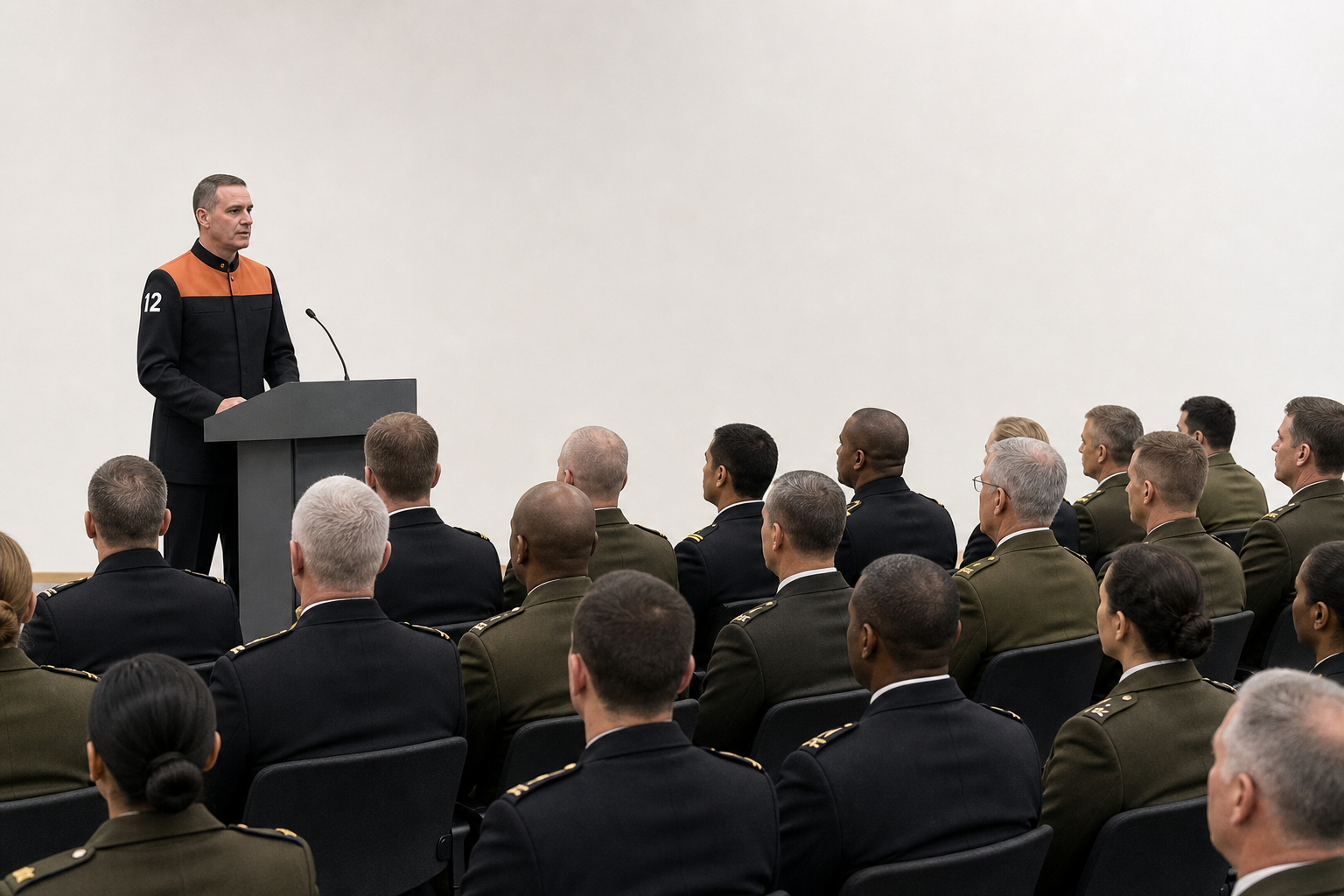
WASHINGTON, D.C. -- Defense Secretary Pete Hegseth will announce a 20 percent reduction in general and admiral slots at the Pentagon this week, according to a Pentagon official, as part of what Hegseth has described as a historic restructuring of military leadership and what military historians are describing as a sentence that requires some context.
The United States currently employs more four-star generals and admirals than it did at the height of World War II, when the country was simultaneously running land wars on two separate continents against two industrialized military empires. At that time, the Army had roughly the same number of active generals as it now assigns to the Pentagon's third-floor conference wing.
Hegseth, who served as a National Guard officer and most recently held the position of Fox News weekend host, will now determine which of those generals are load-bearing.
In a statement released Tuesday, Hegseth said the cuts would "restore a warrior culture to the Department of Defense" and eliminate "the bloat of bureaucratic leadership that has calcified at the top." He did not specify which generals he considers warriors and which he considers calcified, though sources say the distinction will become clear when the list comes out and half the Joint Chiefs are described as having "pivoted to consulting."
Sen. Tom Cotton, who supports the restructuring, told reporters that "a leaner command structure means faster decisions and better outcomes on the battlefield." He said this from a hearing room he has occupied for eleven years without ever having been on a battlefield.
The announcement has prompted a round of nervous calculation inside the Pentagon, where senior officers have reportedly begun auditing their public statements from the past three years for anything that could be categorized as insufficiently enthusiastic about the current administration. One general, who asked not to be named because he is not yet sure which version of events is safest, told colleagues that he had already deleted a 2022 LinkedIn post in which he described interagency cooperation as "a core value."
Retired Admiral James Stavridis, the former NATO Supreme Allied Commander, said on MSNBC that the move risked "hollowing out the institutional knowledge that takes decades to build." He then noted that institutional knowledge was also what people said about the State Department before it lost a third of its staff, and that saying it had not appeared to help.
The practical math of the cut is not straightforward. Reducing general slots by 20 percent does not automatically reduce the number of generals, since most of them hold positions that require a general by statute, meaning Congress would have to change the law, meaning the plan will move at the speed of congressional action, meaning the generals are probably fine.
Hegseth's office did not respond to a request for clarification on the timeline.
The Pentagon, for its part, released a statement praising the secretary's vision and announcing the formation of a working group to develop a framework for identifying which leadership positions are essential and which are, in the official language of the memo, "candidates for strategic deprioritization." The working group will be led by a two-star general and staffed by four colonels.
It is scheduled to deliver its findings in eighteen months.
The story we are making fun of: https://thehill.com/policy/defense/6117672-hegseth-plans-pentagon-leadership-cuts/