Politics
Millennials Quietly Purchasing Minivans After Years Of Calling Their Parents Embarrassing
By Mor Michael, . BSN Network. Satire.
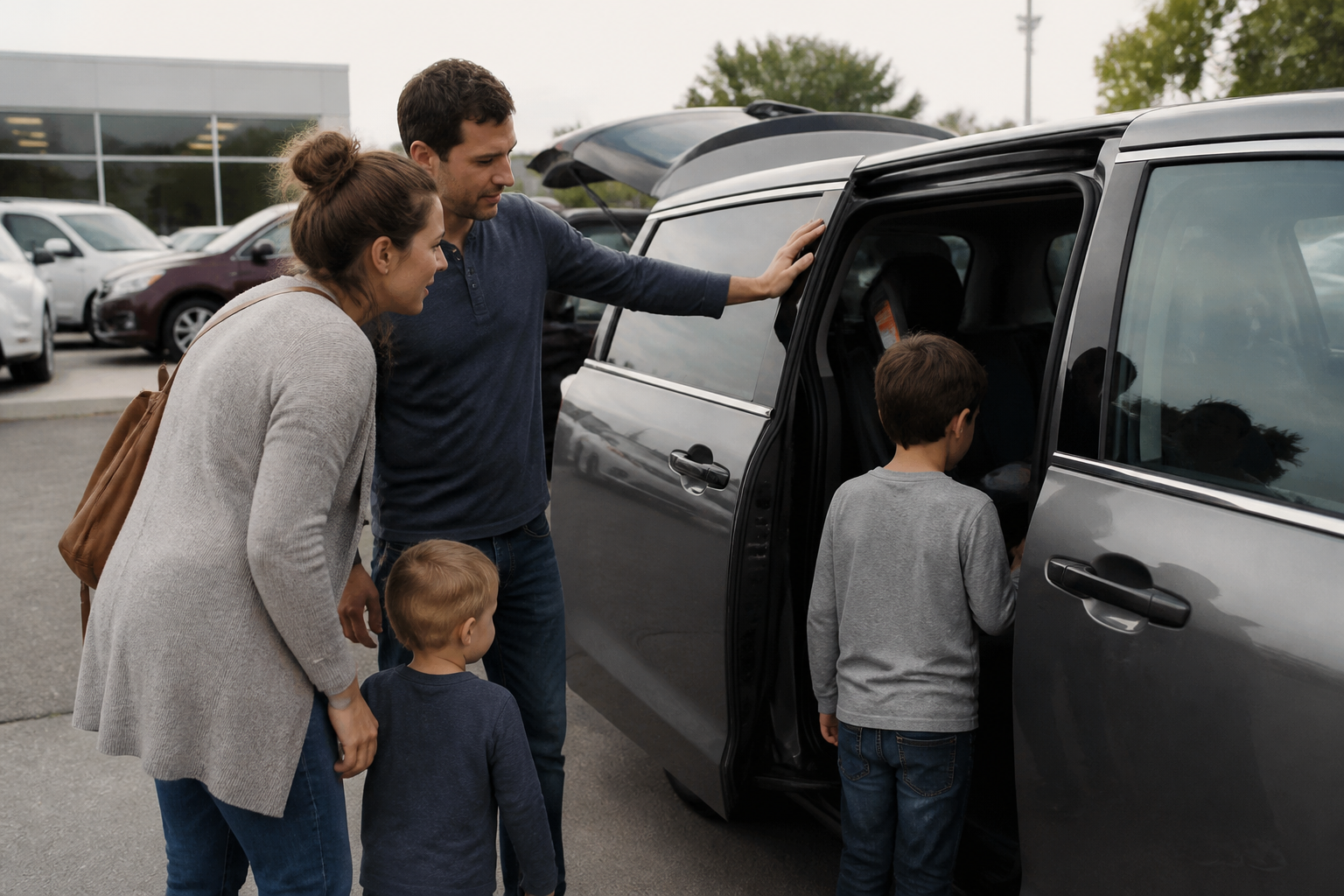
A generation that publicly grieved the loss of its youth at every opportunity has quietly walked into dealerships across the country and purchased a minivan. Sales of the vehicles, which were declared culturally dead sometime around 2003, have surged as millennials age into the precise life circumstances their parents once occupied, complete with the cargo space requirements those circumstances demand.
The Chrysler Pacifica and the Toyota Sienna are leading the comeback. These are not new cars. These are the same fundamental vehicles that millennials spent their childhoods being mortified by in school pickup lines. The Sienna has a dual-power sliding door. The Pacifica has a built-in vacuum. The generation that organized its entire adult identity around not becoming its parents has discovered that a built-in vacuum is actually quite useful.
For roughly fifteen years, the SUV served as the compromise vehicle. It said: I have children, but I also have a self. It said: I could theoretically go off-road. It said nothing about a built-in vacuum because it did not have one. The millennial parent paid a significant premium for this implication of freedom, then used the vehicle to drive to a Costco in Naperville.
The minivan asks none of those questions. It has already made peace with itself. It knows what it is. Automotive analysts call this a value proposition. Therapists might call it something else.
"We're seeing a real attitudinal shift," said one industry researcher who studies generational purchasing behavior and presumably has thought about what that job description sounds like. "Millennials are pragmatic. They want the space. They want the features. They're willing to let go of the stigma."
What the researcher did not say, but what the data implies, is that the stigma was always load-bearing. The entire SUV era was essentially a cultural cope. A three-row SUV costs roughly eight thousand dollars more than a comparable minivan, gets worse mileage, has less usable interior space, and sits higher off the ground in a way that requires children to be lifted in rather than stepping up themselves. The only thing the SUV had over the minivan was that it did not look like a minivan. Millennials paid that premium for twenty years. They are apparently done.
Evyn Moon, the automotive reporter whose piece touched off this round of coverage, framed the trend as a comeback story, which is technically accurate. It is also the kind of framing that lets everyone involved feel like they are participating in something rather than simply aging. The minivan did not go anywhere. The minivan was always there, waiting, in the same way that sensible shoes were always there and flossing was always there and going to bed before midnight was always there. The minivan outlasted the irony.
On parenting forums, the conversion testimonials have a specific texture. "I fought it for years," wrote one user identified as DadOf3_Portland. "I finally drove one. I'm not going back." The replies are uniformly supportive, in the way that people support each other through admissions they recognize from their own interior life.
Kia and Honda have reportedly noticed the trend and are adjusting marketing accordingly. Dodge, which never stopped believing, has said nothing publicly, which is the correct response. Some things do not require comment. Some things simply wait.
The minivan is back. It was always going to be back. The only real news here is how long everyone pretended otherwise, and how much it cost them.
The story we are making fun of: https://www.cbsnews.com/video/millennials-might-be-bringing-back-the-minivan/