Culture
Space Station Finally Gets Solar Panels HOAs Won't Let You Have
By Bruno Von Falken, . BSN Network. Satire.
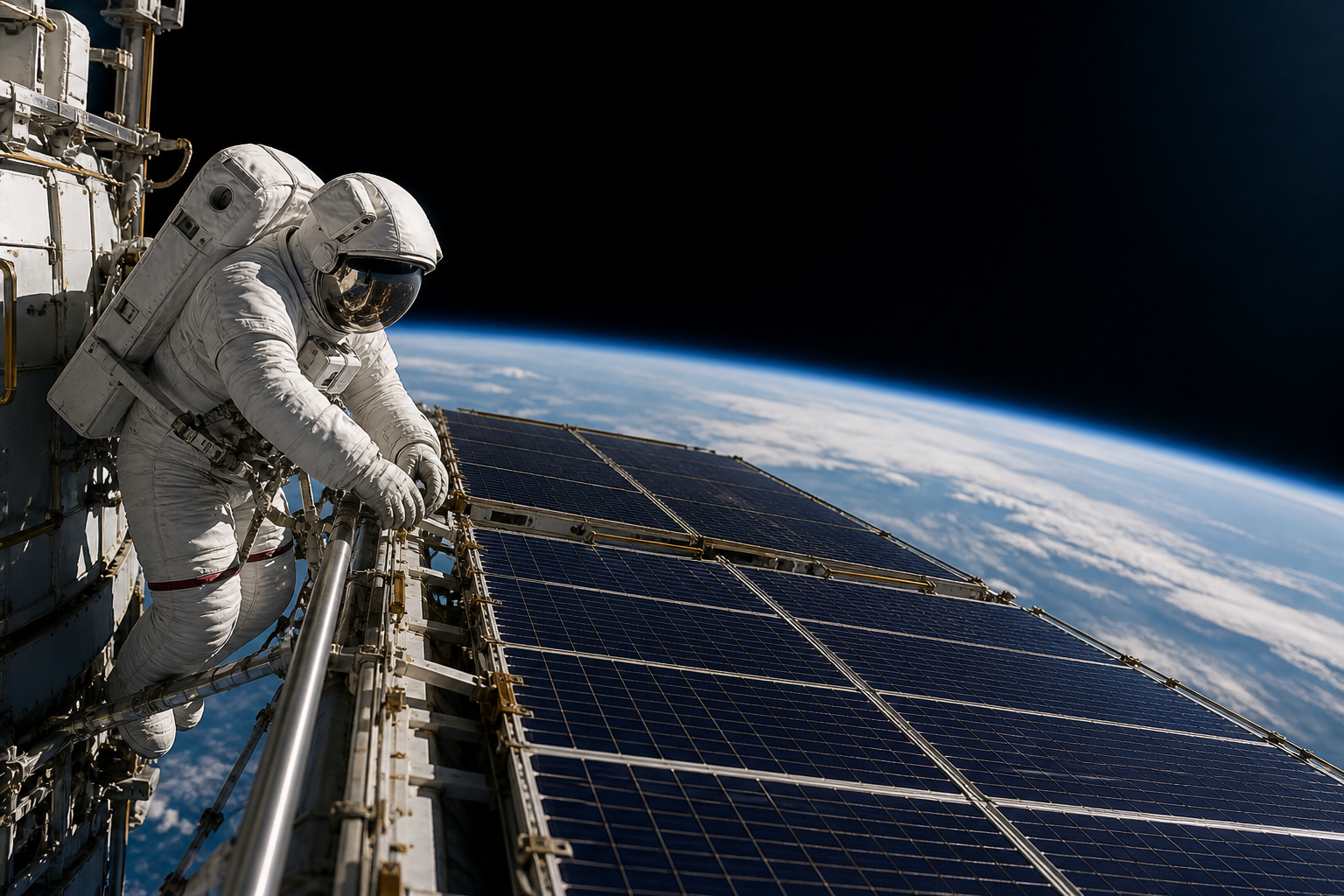
KENNEDY SPACE CENTER, Fla. -- SpaceX launched its 35th resupply mission to the International Space Station early Tuesday, carrying science equipment, crew supplies, and the final set of Roll-Out Solar Arrays needed to complete a power upgrade that has been, in the most technical sense possible, a work in progress across three and a half years and three dozen rocket launches.
The ISS will now have fully functioning solar infrastructure. The Sycamore Glen Homeowners Association of Scottsdale, Arizona, is still reviewing the Kellermans' variance application from February.
NASA confirmed the 6:33 a.m. launch window in a statement that described the mission as delivering "science investigations, supplies, and equipment," which is the space agency's characteristically elegant way of saying they forgot something on the last 34 trips.
The Roll-Out Solar Arrays, known internally as iROSAs, were designed to augment the station's aging power system, which had been operating at reduced capacity for years. Engineers describe the completed array as "a significant upgrade." Deanna Kellerman, 54, described her 4.2-kilowatt rooftop system as "just sitting in the garage because Barbara from the board said the color wasn't earth-toned enough, and I said, Barb, it's a solar panel, not a throw pillow."
NASA Administrator Bill Nelson called the mission "a proud moment for American innovation and our enduring partnership with commercial space." He did not address the Sycamore Glen situation, though sources indicate he is aware of it.
Elon Musk, whose company has now completed 35 missions to the station, posted on X that the launch represented "humanity's multiplanetary future accelerating." He posted this from a compound in Texas that runs on a private microgrid and is therefore unbothered by what Karen Whitfield's architectural review committee thinks about panel placement relative to the roofline.
For the astronauts aboard the ISS, the completed solar array means more consistent power for experiments, life support systems, and whatever they do up there during the long quiet hours when ground control isn't watching. For the Kellermans, it means continued reliance on a 2009 HVAC unit that their utility company has described, in a letter, as "a cry for help."
The SpaceX Dragon capsule is expected to arrive at the station approximately two days after launch, at which point it will be robotically berthed, unloaded, and celebrated as a triumph of human engineering.
The Kellerman variance application is expected to be tabled again at the November meeting, pending a quorum.
The story we are making fun of: https://www.nasa.gov/news-release/nasa-sets-coverage-for-spacex-35th-station-resupply-launch-arrival/