Politics
US Foreign Policy So Bad Russia and Iran Are Leaving the Party Together
By Mor Michael, . BSN Network. Satire.
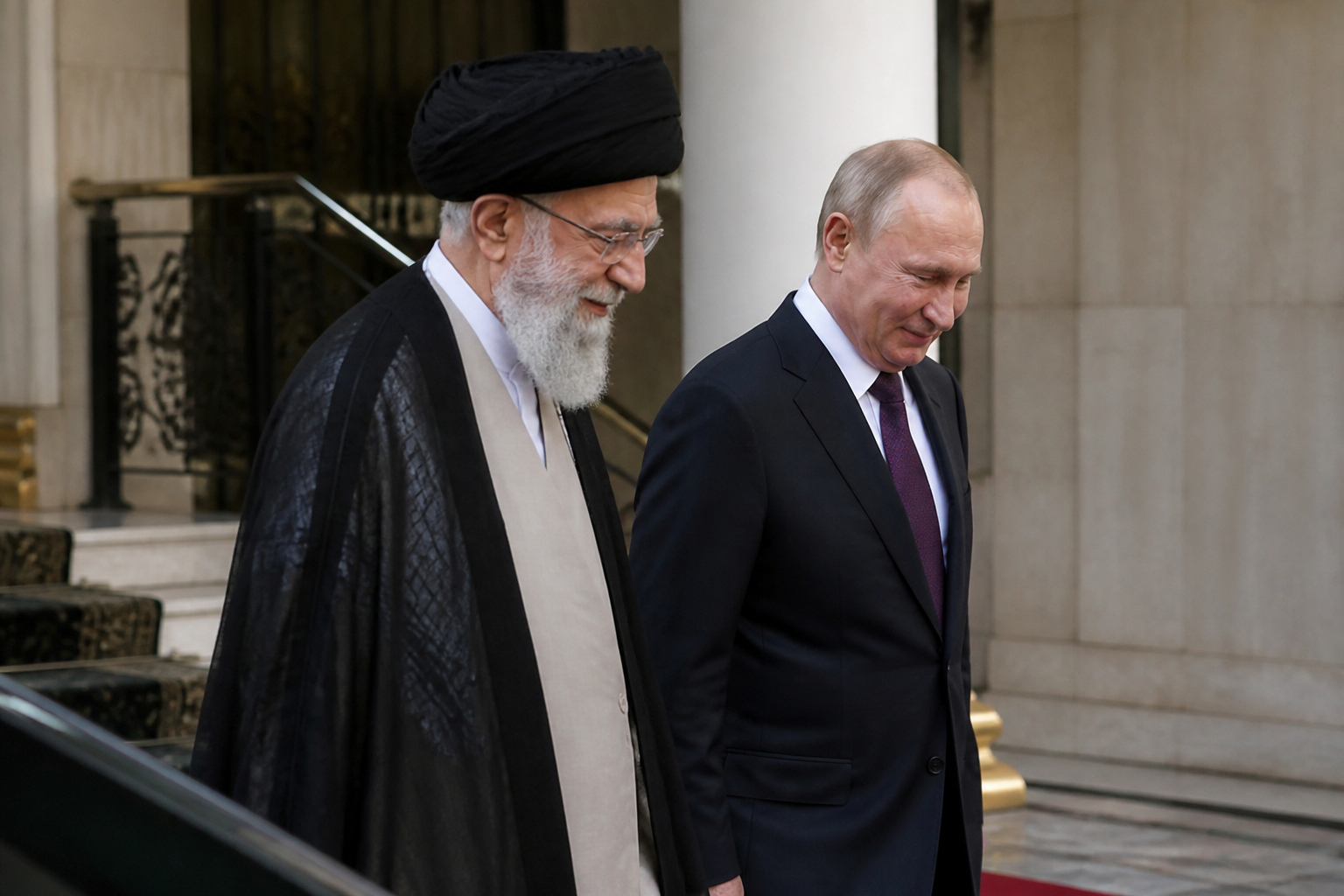
A weekend summit in New Delhi ended Sunday with a joint statement from leaders representing Russia, Iran, India and several other nations, expressing shared concern about American military operations in the Middle East, American tariffs on their exports, and American sanctions on their economies. The statement did not propose a solution. The statement was the solution.
The gathering, hosted by Prime Minister Narendra Modi, brought together a coalition of countries united primarily by the experience of being on the wrong end of a Washington policy announcement. Analysts noted that this is not traditionally the basis for a diplomatic alliance. Analysts also noted that it is working.
Russian President Vladimir Putin, attending via video link because he cannot currently travel to most of the world without being arrested, described the summit as a historic moment of multipolarity. He used the word multipolarity four times. A Russian spokesperson later clarified that multipolarity means the part where America is not in charge, and declined further comment.
Iranian Foreign Minister Abbas Araghchi called the joint statement a message to the international community that coercive unilateralism has no future. He delivered this message from a country currently subject to several thousand pages of American sanctions, which is either an ironic touch or a scheduling conflict nobody caught in time.
The joint communique runs to eleven pages and covers, in order: the war in Gaza, the tariff regime introduced by President Trump earlier this year, the use of financial sanctions as a geopolitical instrument, and a brief paragraph urging dialogue. The paragraph urging dialogue appears on page ten, after nine pages of not doing that.
Trump, asked about the summit at a Monday morning press availability, described Modi as a very good friend, the summit as totally fine, and the joint statement as something he had not read but probably agreed with in certain respects. He then pivoted to tariffs.
What the summit makes undeniable is that the foreign policy architecture of the last three decades, the one where American displeasure was a thing countries managed quietly and alone, has developed a social life. Countries that disagree with Washington used to call their ambassadors and issue carefully worded concerns. Now they book a conference room in New Delhi, order from the same catering menu, and sign a document together. The document is not a treaty. It is not a military pact. It is eleven pages of countries who have been told to sit down deciding, in writing, that they would prefer to stand.
Modi, who hosted the event while simultaneously maintaining a working relationship with Washington, described the summit as a platform for dialogue among diverse nations with shared developmental goals. When a reporter followed up by asking whether hosting Putin and Iran in the same room was a political statement, Modi smiled in a way that Indian diplomatic sources later described as not a denial.
The State Department issued a response calling the summit an attempt to undermine the rules-based international order. It did not specify which rules, which order, or who wrote them, but the sentence has been used before and the formatting was clean.
The countries in that conference room did not choose each other. America chose them, one policy at a time, over roughly twenty years, and eventually there were enough of them to fill a room and order lunch.
The catering, according to one delegate who spoke on background, was excellent.
The story we are making fun of: https://www.bloomberg.com/news/articles/2026-09-12/trump-s-foes-find-common-ground-at-modi-s-new-delhi-summit