Politics
World's Busiest Shipping Lane Now Sponsored By Iran
By Sean Vanity, . BSN Network. Satire.
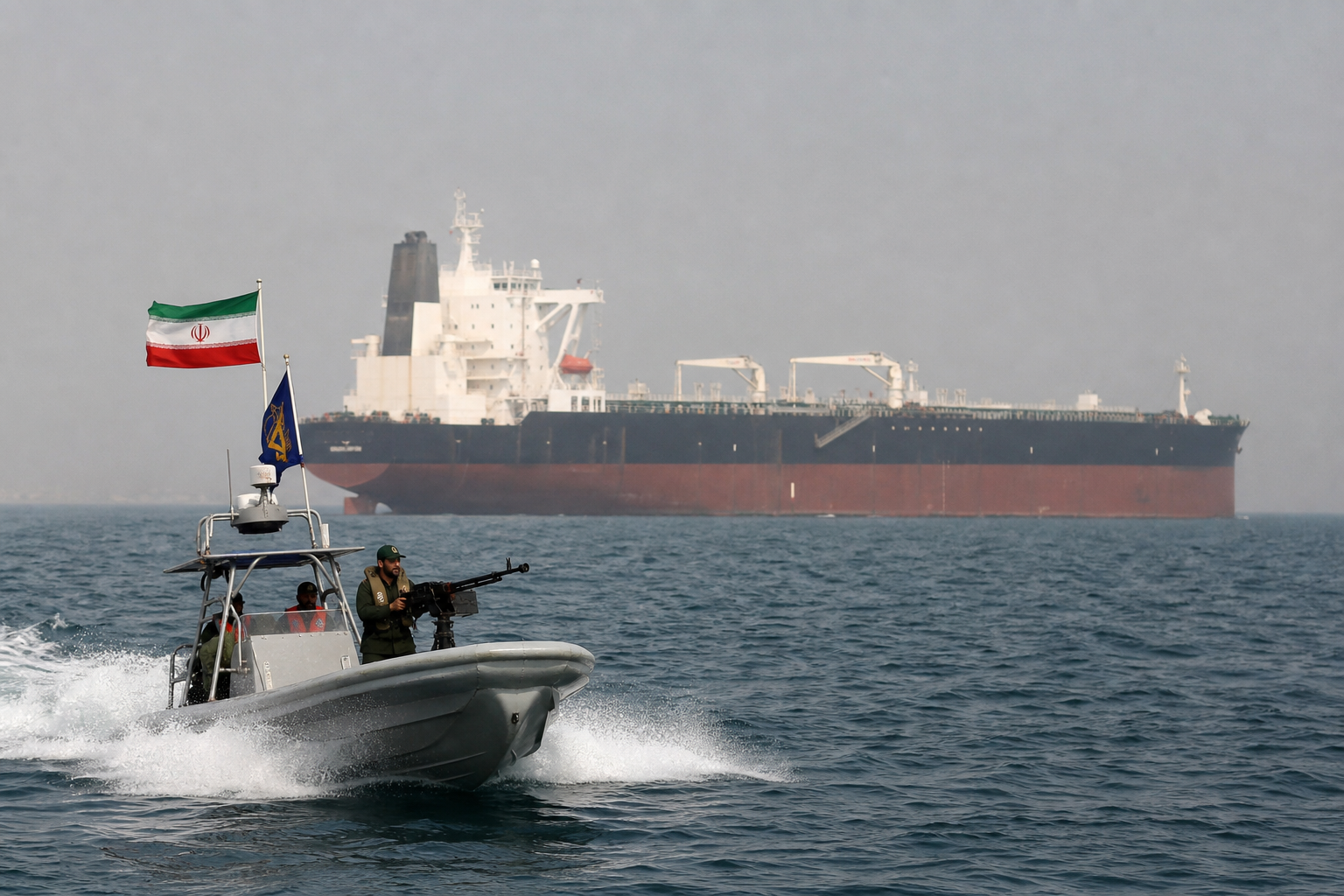
On Friday, Houthi rebels finished what they started and took full control of Yemen's Red Sea coastline, completing a military sweep that gives Iran-backed forces a chokehold over one of the world's most critical shipping corridors. Roughly twelve percent of global trade passes through the Red Sea annually. It now passes through, or does not pass through, at the discretion of a militia that the State Department still describes in official documents using the phrase "non-state actor," which is the diplomatic community's way of saying "we didn't budget for this."
The same day, strikes hit a key Saudi pipeline. Timing, as always, was purely coincidental.
The Bab el-Mandeb strait, the narrow passage connecting the Red Sea to the Gulf of Aden, sits at the southern tip of the newly acquired Houthi portfolio. About six million barrels of oil move through it every day. That number is now subject to what Iranian state media called, without apparent irony, "the sovereign interests of the resistance axis," which is a phrase that means whatever Iran needs it to mean on a given Tuesday.
Iranian Foreign Ministry spokesman Nasser Kanaani held a press conference to clarify that Iran has no operational role in Houthi activities, no command-and-control relationship with Houthi leadership, no financial pipeline to Houthi procurement, and no idea why everyone keeps bringing this up. "The Yemeni people are an independent people making independent decisions," Kanaani said, before returning to his notes. He did not take follow-up questions. He did not appear to feel that follow-up questions were something he owed anyone.
Saudi Arabia, which has spent nine years and somewhere north of a hundred billion dollars trying to stop exactly this from happening, released a statement condemning the pipeline strikes as "a cowardly attack on civilian infrastructure." The statement did not address what the next hundred billion dollars is expected to accomplish that the first hundred billion did not.
Shipping companies are already rerouting. The detour around the Cape of Good Hope adds approximately ten days to the transit time and an amount of additional fuel cost that analysts are currently expressing in the form of very long numbers with a lot of zeroes. Several major carriers have suspended Red Sea transits entirely pending what one logistics executive called "a clearer picture of the security situation," which is corporate for "we are waiting to see if anyone gets their tanker seized before we send ours."
Meanwhile, in Washington, the National Security Council confirmed it is "closely monitoring developments" and "in close contact with regional partners," two phrases that have appeared in every Middle East press briefing since approximately 1987 and have yet to stop anything. A senior administration official, speaking on condition of anonymity because they had apparently decided honesty required cover, described the situation as "fluid," which is a word that used to mean something before it got drafted into government service.
Sen. Tom Cotton of Arkansas called the seizure "a direct result of the administration's weakness toward Iran," which is accurate in roughly the same way that a weather forecast is accurate: directionally correct, entirely useless now that it is raining.
The Houthis, for their part, have not issued a corporate restructuring plan or an investor presentation. They have simply taken the coastline. They appear to be settling in. They have not announced office hours, but then again, neither has the port authority they just replaced.
The Red Sea will continue to function as the Red Sea. The question is who gets to decide what that means, and the answer, as of Friday afternoon, is not the people who were supposed to.
The story we are making fun of: https://www.nbcnews.com/world/middle-east/houthis-control-bab-el-mandeb-yemen-red-sea-saudi-iran-war-oil-rcna597186